A New Home for My Short Fiction on Patreon

Join J. Cronshaw on Patreon for monthly short psychological thrillers, dark speculative fiction, and near-future stories. Try a free month and read exclusive short fiction first.

I have launched a Patreon dedicated entirely to short stories.

It is a space for complete, polished short https://en.wikipedia.org/wiki/Short_storyfiction designed to hit hard and stay with you.

Each month, I share a new short story written to deliver tension, emotion, and a strong final note.

Some stories sit close to psychological thrillers and domestic suspense.

Others step into darker speculative territory, near-future ideas, or unsettling what-ifs inspired by the present.

What connects them is focus on people under pressure and moments that change everything.

Why Short Stories

Short fiction lets me take risks that novels do not always allow.

It gives me room to test ideas, sharpen twists, and concentrate on emotional impact.

These stories are built to be read in one sitting and remembered long after.

If you enjoy fiction that feels precise, unsettling, and personal, this is where it lives first.

What You Get on Patreon

You receive a complete short story every month.

You get access to advance copies of new releases before they reach Amazon.

You read without adverts, algorithms, or distractions.

You can comment, react, or quietly follow along at your own pace.

Everything shared here is exclusive or early access.

Try It Free for a Month

To celebrate the launch, you can join the £2.99 tier for a full month at no cost.

That gives you immediate access to the current short story and the full archive.

There is no obligation to stay beyond the free month.

You can read, enjoy, and decide whether it is right for you.

Who This Is For

This Patreon is for readers who like stories that linger.

It is for readers who enjoy psychological tension, moral unease, and emotional weight.

It is for readers who want to stay close to the work and see new stories first.

If that sounds like you, I would love to welcome you.

Join Here

You can claim your free month here: patreon.com/jcronshaw/redeem/E8BF1

Locker 19 Launch – A Gripping Domestic Thriller Set on the Shores of Morecambe Bay

Discover Locker 19, a tense, twist-driven domestic thriller set in Hest Bank and Morecambe Bay.
When Nicola’s husband vanishes, the truth buried in Locker 19 threatens to destroy everything she loves.
Download this chilling new novella today.

Every family has secrets.

Nicola Scargill just never imagined hers would try to kill her.

She thought she’d lost her husband.

She didn’t know how much more she’d lose.

On the treacherous shores of Morecambe Bay, the tide isn’t the only thing that can swallow you whole.

In the comfortable, affluent village of Hest Bank, Nicola’s life appears secure—warm house, happy son, solid marriage.

But surfaces lie.

And sometimes they hide something dangerous.

When her husband Tim disappears on a freezing December night, his abandoned car sits at the water’s edge, pointing straight toward the bay’s notorious quicksand.

The police prepare Nicola for the worst.

She prepares for something even darker.

Because the investigation uncovers things she never expected.

Bank accounts she didn’t know existed.

A storage unit she’s never seen.

A tangle of secrets Tim has been guarding for years.

And evidence that suggests Nicola herself has been having violent episodes she cannot remember.

The deeper she looks, the less the truth resembles anything she recognises.

Tim isn’t missing.

Tim is hunting.

And everything he’s hiding leads to one place: Locker 19.

Now Nicola has until New Year’s Day to uncover what he’s planning—before he vanishes forever with the one thing she cannot lose.

Set against the haunting beauty of Lancashire’s coast, Locker 19 is a dark, compelling domestic thriller about trust, identity, and the dangers that wait beneath calm waters.

Get your copy today—because you need to know what’s in Locker 19.

A composite 3D image of the thriller novel Locker 19 by J. Cronshaw. The Kindle edition appears on the left, showing the book cover: a dark, two-storey house at dusk with a single upstairs window glowing orange, set against a deep blue sky. The title Locker 19 is printed in bold yellow text above the house, with the tagline “What is your husband hiding?” at the top. J. Cronshaw’s name appears in white at the bottom. To the right, a 3D hardback version of the same cover stands upright, angled slightly, mirroring the design and creating a cohesive promotional display.

Why ordinary British homes make the perfect setting for domestic noir

A look at why familiar British houses, quiet streets and everyday domestic life create the ideal backdrop for unsettling psychological suspense. Perfect for readers who love dark, twisty British thrillers.

British houses look harmless at first glance.

Brick semis with clipped hedges. Terraced streets with hanging baskets. Bay windows glowing gold at teatime.

Everything suggests comfort, routine and safety. Everything whispers that nothing dreadful could possibly happen here.

The tension comes from knowing that this calm isn’t the whole story. Readers sense the pressure lurking beneath the wallpaper long before the characters do.

A house can hold silence like a secret. A hallway can feel tight when a marriage starts to strain. A kitchen can become a battleground without a single plate thrown.

Domestic noir thrives in places that pretend to be safe.

It feeds on the gap between appearance and truth. It turns ordinary rooms into unsettling spaces. It reminds us that danger doesn’t always arrive wearing a mask. Sometimes it wears slippers. Sometimes it sits beside you on the sofa.

British homes add another layer of unease.

Terraced rows mean neighbours share walls. Every argument becomes communal property. Every late-night footstep carries through plasterboard and brick. Every twitch of a curtain hints at someone noticing too much.

Suburban estates give a different kind of pressure.

The manicured lawns. The polite nods at wheelie bins. The quiet competition between families. The sense that everyone performs a version of themselves, terrified of slipping out of character.

Then there are country cottages.

They promise peace and fresh air. They sit in the middle of fields and woodland. They look idyllic from the outside. They also feel isolated. Once night falls, they leave characters with nowhere to run when things turn.

All these places work because readers recognise them. They’ve walked those streets. They’ve stood in those kitchens. They’ve stared out at gardens that look perfectly calm while something inside them refuses to settle.

They know how quickly ordinary life can shift. They know how easily a home can become a trap.

Domestic noir is most effective when it uses the familiar against us. It proves that the darkest stories don’t need gothic towers or haunted mansions.

They only need a front door you’ve locked a hundred times. A staircase you can climb in your sleep. A family you think you know. A secret waiting in the quiet.

The Empty Chair – A Chilling Christmas Domestic Noir Short Story Set in Morecambe

A missing sister.
A Christmas dinner.
A terrible truth waiting at the table.

1.

The good china comes out once a year. Boxing Day stays casual—paper plates, cold cuts, everyone in pyjamas until noon. But Christmas Day means the Royal Doulton with the gold trim, the ones Mum inherited from Nan, the ones that live in tissue paper eleven months out of twelve.

I lift each plate from its wrapping. The pattern hasn’t changed since I was small. Pale roses, delicate stems, a border that catches the light. Mum says they’re worth something. I’ve never checked.

Five places around the table. Four of us left to fill them.

The fifth setting goes down anyway. Mum insists. “She might come home,” she said last week. “Stranger things have happened at Christmas.”

Stranger things. My sister vanished eleven months ago and we’re still laying her a place at the table.

Dad appears in the doorway, tea towel draped over his shoulder. He’s been “helping” in the kitchen for the last hour, which means staying out of Mum’s way while she orchestrates the turkey.

“Looking good, Han.” He nods at the table. “Very festive.”

“Festive.” The word tastes wrong.

“Your mum’s outdone herself with the sprouts this year. Secret ingredient, apparently.”

“Nutmeg?”

“She won’t say. National security level, this recipe.”

He’s trying. The effort shows in every forced syllable, every joke that lands flat against the silence. His eyes drift to the empty chair before snapping back to me.

The menu hasn’t changed in fifteen years. Turkey, roast potatoes, honey-glazed parsnips, Brussels sprouts with the secret ingredient everyone knows is nutmeg. Pigs in blankets. Bread sauce from a packet because Mum gave up on homemade after the Great Lumpy Disaster of 2019.

Same menu. Same crackers from Marks and Spencer, the ones with the decent jokes. Same chair sitting empty at the head of the table where Lucy used to hold court, telling stories about her life in Manchester, her flatmates, her job at the gallery that never quite paid enough.

Lucy. Even thinking her name tightens something in my chest.

“Crackers.” Dad points at the sideboard. “Don’t forget the crackers.”

“I won’t.”

“And the napkins need folding. Your mum likes them in triangles.”

“I know, Dad.”

He hovers. The tea towel twists between his fingers.

“Right. Good. I’ll just—” He gestures vaguely towards the kitchen, where Mum’s voice rises over clattering pans. “Better check on the gravy situation.”

He retreats. The floorboards creak under his weight, the same boards that have announced every arrival and departure in this house for thirty years. Victorian terrace, bay windows, the kind of place estate agents call “characterful” when they mean draughty.

I fold napkins into triangles. The fabric’s stiff, barely used. Everything in this house preserves itself, waiting for occasions that feel increasingly hollow.

A knock at the front door. Three sharp raps.

I freeze, napkin half-folded. Mum appears from the kitchen, wiping her hands on her apron. Dad emerges behind her. We stand in the hallway, none of us moving towards the door.

“Probably carol singers,” Dad says.

“Bit early for carols.”

“Or the neighbours. Dropping off a card.”

Three pairs of eyes fix on the frosted glass panel. No shadow moves behind it. No second knock comes.

Dad reaches for the handle.

The step stands empty. Grey stone, swept clean this morning. The holly wreath Mum hung last week sways slightly in the wind off the bay.

Nothing. No one.

Then Dad looks down.

A single envelope lies on the mat. Red, Christmas-card shaped, propped against the doorframe. No stamp. No postmark. Hand-delivered.

Mum makes a sound. Not quite a gasp, not quite a word.

The handwriting loops across the front. Elegant, distinctive, the capital H on “Hannah” curling back on itself in that particular way.

Lucy’s handwriting.

I’d know it anywhere. Every birthday card, every note left on the fridge, every passive-aggressive Post-it about washing up. That handwriting belongs to my sister.

My sister who vanished. My sister whose face stares out from the missing person poster still taped to the lamp post at the end of our road. My sister whose room upstairs sits exactly as she left it, bed made, curtains drawn, because Mum can’t bear to change anything.

Dad bends, picks up the envelope. His fingers tremble.

“It’s addressed to you, Hannah.”

The card passes into my hands. The paper feels expensive, thick and slightly textured. Lucy always spent too much on stationery. Said cheap cards were depressing.

Mum sits down heavily on the bottom stair. Her hand grips the banister, knuckles white. She stares at the envelope as if expecting Lucy to materialise behind it, keys in hand, explanation ready.

“Open it.” Her voice comes out rough. “Please.”

I slide my thumb under the flap. The glue gives way easily, barely sealed. Inside, a simple card. White background, single gold star, the kind you’d find in any supermarket.

One line of text. Lucy’s loops, Lucy’s pressure, Lucy’s distinctive slant.

I thought you’d forgotten.

The words blur, sharpen, blur again.

“What does it say?” Mum’s halfway off the stair, reaching. “Hannah, what does it—”

I close the card. Slide it into my back pocket before her fingers can close around it.

“Nothing useful. Just…season’s greetings.”

The lie scrapes my throat.

Dad’s watching me. That look he gets when he knows I’m not telling the whole truth but won’t push in front of Mum. His jaw tightens. His eyes flick to my pocket, then away.

“Right.” He clears his throat. “Well. Turkey won’t carve itself. Shall we?”

Mum doesn’t move. Her gaze stays fixed on my hands, on the space where the card was.

“She’s alive.” The words fall out of her, flat and certain. “That proves it. She’s alive and she’s coming back.”

“We don’t know that, love.”

“It’s her writing, Martin. I’d know it anywhere.”

“Anyone could copy—”

“Don’t.” Her voice cracks. “Don’t you dare tell me I don’t know my own daughter’s hand.”

The hallway shrinks around us. Cold air seeps through the gap under the door, carrying the smell of frost and exhaust from passing cars.

I thought you’d forgotten.

Forgotten what? Forgotten her? Forgotten something specific? The words twist in my mind, refusing to settle into meaning.

Lucy vanished on January twenty-third. Police searched for weeks. Posters went up, appeals went out, the local paper ran her photo until a different tragedy pushed her off the front page.

No body. No evidence. No explanation.

Just absence. The kind that grows heavier with every passing month.

And now a card. Her handwriting. A message that sounds like accusation.

“I’ll check the gravy.” Mum stands slowly, using the banister for support. Her movements have aged since January. Everything about her has aged. “Don’t let it burn, Martin. Not this year.”

She disappears into the kitchen. The door swings shut behind her.

Dad turns to me. “What did it really say?”

“I told you—”

“Hannah.”

I pull the card from my pocket. Hand it over. Watch his face as he reads.

The colour drains from his cheeks. He reads it twice, three times, as if the words might rearrange themselves into something less unsettling.

“I thought you’d forgotten.” He says it aloud, testing the shape of it. “Forgotten what?”

“I don’t know.”

“When did you last speak to her? Before she—”

“Christmas Eve. Same as everyone else.”

He nods slowly. The card shakes in his grip.

“Don’t tell your mother. Not the exact words. She’ll spiral.”

“I know.”

“We’ll figure it out. After lunch. Once Tom gets here.”

Tom. My brother. Always late, always apologetic, always somewhere else when things fall apart.

Dad tucks the card into his own pocket. Pats it twice, as if to keep it contained.

“Best get on with things. She’ll want everything perfect.”

He heads for the kitchen. I stay in the hallway, listening to the muffled sounds of preparation, the clink of serving dishes, the murmur of my parents coordinating around each other.

The cold from outside settles into my bones.

I thought you’d forgotten.

But I haven’t forgotten anything. That’s the problem.

2.

Tom’s car pulls up twenty minutes late. The engine idles too long before cutting out, and through the bay window, I watch him sit behind the wheel, staring at nothing.

Mum’s already called twice. Dad’s stopped making excuses.

The gravy sits in its boat, skin forming. The turkey rests under foil, temperature dropping by the minute. Brussels sprouts cool in their dish, nutmeg scent fading.

Finally, the car door opens. Tom emerges, pale and jittery, moving with the careful precision of someone holding themselves together through sheer will. His coat hangs open despite the cold. His tie’s crooked.

“Traffic on Marine Road.” He shrugs off the explanation before anyone asks. “Nightmare.”

Mum hugs him too long. Dad claps his shoulder with forced heartiness.

“Good to see you, son. Let’s eat before everything goes cold.”

We take our places. The same seats we’ve claimed since childhood—Dad at the head nearest the kitchen, Mum opposite, me and Tom facing each other across the width of the table.

Lucy’s chair sits between Mum and me. Empty. Set with the good china, napkin folded into its perfect triangle, wine glass catching the light from the overhead fixture.

Tom stares at it. His jaw works.

“We don’t have to—” he starts.

“Yes, we do.” Mum’s voice brooks no argument. “She’s still family.”

“She’s not here, Mum.”

“She might be.”

The silence stretches. Cutlery clinks against china. Dad serves turkey.

“Looks wonderful, love.” He addresses Mum without looking up. “Really outdone yourself this year.”

“The potatoes are too soft.”

“They’re perfect.”

“They’re not. The oven’s been playing up again. I told you to look at it.”

“I’ll call someone in the new year.”

“You said that last January.”

The familiar rhythm of their bickering fills the space where conversation should be. Safe territory, well-mapped, requiring nothing from the rest of us.

Tom pushes food around his plate. He hasn’t touched the turkey. His fork traces patterns through the gravy, building walls between the parsnips and the sprouts.

Every few seconds, his eyes slide to the empty chair.

“So.” Dad clears his throat. “Tom. How’s the new flat working out?”

“Fine.”

“Settling in alright? Getting to know the neighbours?”

“It’s fine, Dad.”

“And work? Still enjoying the—”

“Can we not?” Tom’s fork clatters against his plate. “Can we just…not?”

The air tightens.

Mum reaches for the gravy boat. Her hand shakes. The spout catches the edge of her plate, tips, and brown liquid spills across the white tablecloth.

“Oh, for—” She’s up immediately, dabbing with her napkin. “I’ve ruined it. The whole— I’ve ruined everything.”

“It’s fine, love. Sit down.”

“It’s not fine. Nothing’s fine.” Her voice cracks. “She should be here. Lucy should be here and instead we’re pretending this is normal, pretending we can just—”

She breaks off. Tears spill down her cheeks, silent and steady.

Dad guides her back into her chair. Murmurs something low and soothing. His hand rubs circles on her back while she cries.

Tom watches, face blank. His fingers grip the table edge.

I stand. “I’ll get a cloth from the kitchen.”

The kitchen door swings shut behind me, muffling the sound of Mum’s quiet sobs. The extractor fan hums overhead, drowning out everything but my own breathing.

The sink’s full of prep dishes. Potato peelings clog the drain. The window above shows darkness, our reflections ghosted against the glass.

Footsteps behind me.

Tom appears in the doorway. He doesn’t come in, just hovers at the threshold, arms crossed, shoulders hunched.

“We need to talk.” His voice barely rises above the fan.

“Not now.”

“Yes. Now.”

He steps inside. The door swings shut behind him.

“The card.” He moves closer. “Dad showed me. Lucy’s handwriting.”

“How do you know about—”

“He caught me outside. Wanted to warn me before I went in.”

My hands find the counter edge. The granite feels cold through my palms.

“So?”

“So I saw her.” The words come out rushed, tangled. “The night she disappeared. I was there.”

The extractor fan fills the silence. Its hum seems louder now, more insistent.

“What do you mean, you were there?”

“I came by that night. Late. After everyone else had gone to bed.”

“Why?”

“She called me. Asked me to pick her up. Said she’d had a row with you and needed to get out.”

My chest tightens. “You never said anything.”

“I thought she’d come back.”

“She didn’t come back, Tom. She vanished. The police searched for—”

“I know.” He runs a hand through his hair. “I know, alright? I’ve been living with this for eleven months.”

“What exactly did you see?”

He won’t meet my eyes. His gaze fixes on the floor, the sink, the window—anywhere but my face.

“She was upset. Crying. Told me something had happened, something bad, and she needed to leave.”

“Something bad?”

“She wouldn’t say what. Just that she couldn’t stay here. Couldn’t face—” He stops. Swallows. “Couldn’t face you.”

The words land heavy.

“Why me?”

“I don’t know. She just kept saying your name. Saying she couldn’t believe what you’d done.”

“What I’d done? I didn’t do anything. We argued about the stupidest thing—whether she was actually going to stay for Christmas or disappear to Manchester like she always—”

“Hannah.” He looks at me finally. His eyes are red-rimmed, bloodshot. “She was scared. Actually scared. Of you.”

The floor tilts beneath me.

“That’s ridiculous.”

“I’m telling you what I saw.”

“You’re telling me my sister was scared of me, and you just—what? Drove off? Left her?”

“She wouldn’t get in the car.” His voice cracks. “I tried. I begged her to let me take her somewhere safe. She said she needed to walk. Clear her head. I thought she’d calm down and come home in the morning.”

“And when she didn’t?”

“I was terrified. I kept waiting for them to find—” He stops. Breathes. “I kept waiting for news. And when none came, I convinced myself she’d run away. Started over somewhere. That she was okay, just…done with all of us.”

“So you said nothing.”

“What was I supposed to say? That I was the last person to see her and I let her walk off into the dark?”

Raised voices. Not ours—our parents’, drifting through from the dining room. Mum’s high and strained, Dad’s low and urgent.

Tom steps back towards the door.

“They heard us.”

“Then let them hear.” I move towards him. “You should have told someone. The police. Anyone.”

“And said what? That my sister was scared of my other sister for reasons she wouldn’t explain? That she ran off crying and I let her go?”

“Yes. Exactly that.”

He shakes his head. “You don’t understand.”

“Then help me understand.”

The kitchen door swings open. Dad stands in the frame, face grey.

“What’s going on in here?”

Neither of us answers.

“Your mother’s in pieces. On Christmas Day. And you two are hiding in here?”

“Dad—” Tom starts.

“I don’t want to hear it. Both of you. Back to the table. Now.”

He holds the door open. Waits.

Tom moves first, sliding past Dad with his head down. I follow, the card’s message burning in my mind.

I thought you’d forgotten.

The dining room feels smaller now. The empty chair seems closer to the table, angled towards us as if leaning in to listen.

Mum sits with her head bowed, hands clasped in her lap. She doesn’t look up as we return.

Dad takes his seat. Reaches for his wine glass.

“A toast.” His voice strains for normalcy. “To family. Whatever shape it takes this year.”

I don’t lift my glass.

3.

The plates sit half-cleared. No one’s eating anymore. Mum stares at the tablecloth, at the brown stain spreading through the fabric. Dad’s refilled his wine twice without drinking.

Tom hasn’t spoken since we came back from the kitchen. He sits rigid, shoulders pressed against his chair, eyes fixed on something none of us can see.

The empty chair fills my peripheral vision. Every time I turn my head, it’s there. Waiting.

“Perhaps we should skip pudding.” Mum’s voice comes out hoarse. “I’m not really hungry.”

“The trifle will keep.” Dad reaches for her hand. “We can have it tomorrow.”

“I made it for today.”

“I know, love.”

“Lucy’s favourite.” She squeezes his fingers. “She always had seconds. Remember? Even when she claimed to be on some diet.”

The memory surfaces—Lucy at this table, spoon scraping the bottom of her bowl, swearing this was the last time before going back for more. Her laugh filling the room.

A knock at the front door.

Sharp. Urgent. Three raps that jolt through the silence.

Everyone freezes.

“Who—” Mum half-rises from her chair.

“I’ll get it.” Dad’s already moving, napkin falling from his lap. “Probably just the neighbours.”

He disappears into the hallway. We sit in silence, straining to hear. The front door opens. Muffled voices carry through—Dad’s low rumble, then someone else. A woman.

Footsteps return. Dad appears in the doorway, Margaret from number fifteen close behind.

Margaret’s lived across the road since before I was born. She brings in parcels when we’re out, feeds the cat when we’re away, knows everyone’s business without ever seeming nosy.

A cardboard parcel sits tucked under her arm.

“Sorry to interrupt your dinner.” She glances at the table, at the barely touched food, at the empty chair. Her expression flickers. “Only this was left on my step this morning. Addressed to your Hannah.”

She holds out the parcel. Brown cardboard, no distinguishing marks, my name written across the front in black marker.

Different handwriting. Not Lucy’s loops this time. Block capitals, anonymous and deliberate.

“Must have been delivered to the wrong house.” Margaret smiles apologetically. “These couriers, honestly. They’ll leave things anywhere.”

“Thank you, Margaret.” Dad takes the parcel. “Very kind of you to bring it over.”

“No trouble. I hope you’re all having a lovely—” She stops. Takes in Mum’s red eyes, Tom’s rigid posture, the tension crackling through the room. “Well. I’ll let you get back to it.”

Dad walks her out. The front door clicks shut.

The parcel sits on the table, innocent and unremarkable.

“What is it?” Mum reaches for it. “Who sent you something?”

“I don’t know.”

“Well, open it.”

I should take it upstairs. Open it alone, away from their watching eyes. But the weight of it draws my hands forward, and before I can think better of it, I’m tearing at the tape.

The cardboard falls away.

Inside, wrapped in tissue paper, a mobile phone.

Lucy’s phone.

The same rose-gold case she bought herself for her birthday. The same crack across the bottom left corner from when she dropped it outside the pub last summer. The same sticker on the back—a cartoon cat she found hilarious and I always thought was stupid.

Mum’s hand flies to her mouth.

“That’s—” Tom stands so fast his chair scrapes against the floor. “Is that—”

“It’s hers.” I turn it over in my hands. The weight feels wrong. Foreign. Like holding something that belongs to the dead.

Dad returns from seeing Margaret out. He stops in the doorway, colour draining from his face.

“Is that Lucy’s?”

“Yes.”

“How is that possible? The police searched everywhere. Her flat, her office—”

“Someone had it.” My thumb finds the power button. “Someone’s had it all this time.”

The screen lights up. Battery at eighty-three percent. Someone’s been charging it.

The home screen shows Lucy’s face—a selfie from the beach, wind catching her hair, eyes squinted against the sun. Her smile wide and easy, the way it used to be.

“What’s on it?” Mum’s voice trembles. “Are there messages? Clues?”

I swipe through. The phone feels heavier with every tap.

Contacts: deleted. Messages: deleted. Photos: deleted. Email accounts: logged out. Every trace of Lucy’s digital life, methodically erased.

Except one thing.

A single video file sits in the camera roll. Dated January twenty-third. The night she vanished.

“There’s a video.” My throat tightens around the words.

“Play it.” Mum’s already moving, coming around the table to stand behind me. “Hannah, play it.”

The lights flicker. A bulb dying in the overhead fixture, sending shadows dancing across the walls.

My thumb hovers over the play button.

“Maybe we should watch this privately first.” Dad steps closer. “Just in case—”

“In case what?” Mum’s voice rises. “She’s my daughter, Martin. Whatever’s on there, I have a right to see it.”

The room waits.

I press play.

The screen fills with our dining room. This room, filmed from somewhere near the door. The angle’s low, phone propped against something.

Night-time darkness beyond the windows. The overhead light on. The table pushed against the wall, chairs scattered.

And voices. Raised, angry, unmistakable.

Mine.

Lucy’s.

On screen, I storm into frame. My face twisted with fury. My hands gesturing wildly, pointing at something off-camera.

“—don’t get to just leave!” My recorded voice cracks. “Every single time, Lucy. Every single time something gets hard, you run.”

Lucy enters the frame. Her back to the camera, shoulders hunched. “You don’t understand—”

“Then explain it to me! For once in your life, explain instead of disappearing!”

“I can’t.” She turns. Her face catches the light—tears streaming, mascara smeared. “You wouldn’t believe me.”

“Try me.”

“You’ll hate me.”

“I already—”

The words cut off. I watch myself lunge forward. Not to hit—to grab, to stop her from leaving again.

Lucy steps back. Her foot catches on something. The rug, maybe, or a displaced chair.

She falls.

The sound of her head hitting the radiator is small and precise. A wet crack that doesn’t match the violence of it.

Mum screams. Not on the video—here, now, standing behind me with her hand over her mouth.

On screen, Lucy lies still. Her hair fans across the floor. A dark stain begins to spread beneath her skull.

The recorded me stands frozen. Hands still raised. Face blank with shock.

Then Mum rushes into frame. Dad behind her. Their voices overlapping, panicked and high.

“We need to call an ambulance—”

“Wait. Wait.” Mum kneels beside the body. Presses fingers to Lucy’s neck. Her face crumples. “She’s— Martin, she’s—”

“No.” Dad’s voice breaks. “No, that’s not—”

“What do we do?” The recorded me backs away, hands shaking. “What did I— I didn’t mean to—”

“It was an accident.” Mum looks up, straight at me. Her eyes hold something fierce and terrible. “Listen to me, Hannah. It was an accident. We’ll fix this. We’ll protect you.”

“How can we—”

“We’ll figure it out. No one needs to know.”

The video cuts to black.

4.

The phone slips from my fingers. It hits the table with a clatter, screen still glowing.

The room has shrunk to nothing. Just this table, these faces, this impossible weight pressing down on my chest.

“Hannah.” Mum’s voice comes from somewhere far away. “Sweetheart—”

I can’t answer. My throat’s closed. My lungs won’t fill.

The video sits there, frozen on its final frame. Darkness. Silence. The moment before everything changed.

“We need to talk about this.” Dad moves towards me, hands raised. “There are things you don’t remember—”

“Remember?” The word tears out of me. “I killed her. That video shows me killing my sister, and you’re talking about what I remember?”

“It was an accident.” Mum reaches for my arm. I pull away. “Hannah, please. You have to understand—”

“Understand what? That you covered up a death? That you’ve been lying to the police for eleven months?”

“We were protecting you.”

“From what?”

“From yourself.” Dad’s voice goes hard. “From what it would do to you if you knew.”

My legs won’t hold me. I sink into the nearest chair—Lucy’s chair, the empty one, the one no one was supposed to sit in. The fabric feels cold through my clothes.

“You hid her body.”

Neither of them denies it.

“Where?”

Silence.

“Where did you put my sister?”

“That doesn’t matter now.” Mum kneels beside me, tears cutting tracks through her makeup. “What matters is that we kept you safe. You didn’t mean to hurt her. The guilt would have destroyed you.”

“So you took it away? Just—erased it?”

“You were in shock.” Dad stands over us, arms crossed, jaw tight. “You didn’t speak for three days. When you finally came out of it, you didn’t remember anything after the argument. The doctors said trauma does that sometimes. The mind protects itself.”

The floor pitches beneath me. Eleven months of grief, of searching, of hoping Lucy might walk through the door. All of it built on lies.

“The card.” I force the words out. “Lucy’s handwriting.”

They look at each other.

“We don’t know who sent that.” Mum’s voice wavers. “We didn’t— we wouldn’t—”

“Someone knows.” Tom hasn’t moved from his spot by the wall. His face is grey, hands shoved deep in his pockets. “Someone’s been watching this whole time.”

“You knew.” I turn on him. “That night. You came for her, and she was scared. What did she tell you?”

“Nothing. I swear—”

“Don’t lie to me. Not anymore. Not after this.”

He closes his eyes. When he opens them, something has broken behind them.

“She said you’d hurt her. That you’d grabbed her during the argument, shoved her against the wall. She was terrified.”

“That’s not—” I stop. The video plays in my mind, my hands reaching, Lucy falling.

Maybe it is what happened. Maybe this is who I am.

“She wanted to go to the police.” Tom’s voice drops. “Said she had proof. That she’d recorded everything.”

The phone on the table. Lucy’s phone, filming from its hidden spot.

“I convinced her to wait until morning.” Tom’s face twists. “Told her everyone would be calmer after they’d slept. I thought—”

“You thought you could fix it.” Dad’s tone hardens. “Control the situation. Keep everything tidy.”

“I thought she’d be alive in the morning.” Tom’s voice breaks. “How was I supposed to know—”

“Know what?” Mum stands slowly, using my chair for support. “That she’d fall? That it was an accident?”

“That Hannah would—”

“Don’t.” Dad cuts him off. “Don’t put this on her. She doesn’t remember. She’s been grieving for her sister for almost a year, and you kept this from us?”

“You kept it from her too.” Tom gestures at the phone, at the video frozen on its screen. “You buried the body. You destroyed evidence. You turned our family into a crime scene and expected everyone to just—what? Move on?”

“We protected her.” Mum’s voice rises. “What were we supposed to do? Let our daughter go to prison for an accident?”

“She killed someone, Mum.”

“Her sister slipped and hit her head. It could have happened to anyone.”

“But it didn’t happen to anyone. It happened to Lucy. Our Lucy.”

The name hangs in the air between us.

Lucy. Gone. Dead. Hidden somewhere I’ll probably never know.

I stand. The chair scrapes back, loud in the sudden quiet.

“I need to see it.”

Three faces turn towards me.

“See what?”

“Where you put her. Where Lucy is.”

Mum’s face crumbles. “You don’t want to—”

“I need to know. After everything, I need to see for myself.”

Dad steps forward. His hand lands on my shoulder, heavy and certain.

“That’s not possible, sweetheart. Not anymore.”

“Why not?”

He doesn’t answer. He doesn’t have to.

The understanding settles through me, cold and absolute. Whatever they did with Lucy’s body, it’s gone now. Cremated, buried, scattered. The evidence erased along with the truth.

Mum takes my hands. Her grip trembles but her eyes hold steady.

“We can move past this. As a family. It was an accident, and it’s done, and no good comes from—”

“From what? Justice? The truth?”

“From destroying your own life over something you can’t change.”

“Lucy’s life is already destroyed.”

“And yours doesn’t have to be.” She squeezes tighter. “You have a future, Hannah. A career, prospects, everything ahead of you. Lucy—” Her voice catches. “Lucy would want you to live it.”

“You don’t know what she’d want. None of us do. Not anymore.”

I pull my hands free. Step back until the table blocks my path.

The three of them watch me. Dad rigid with control, Mum liquid with grief, Tom somewhere between fury and despair.

A family bound by secrets. By lies. By the weight of what we’ve done and what we’ve hidden.

“If I go to the police—”

“You won’t.” Dad’s voice doesn’t waver. “You’d be confessing to manslaughter at best. Your mother and I would face charges for obstruction, for concealing a body. Tom for withholding evidence. This family would be destroyed.”

“It’s already destroyed.”

“It doesn’t have to be.” He moves closer, lowering his voice. “The phone. The video. We can get rid of it. No one else knows.”

“Someone sent that parcel. Someone knows enough to—”

“We’ll deal with that. Together. As a family.”

Family. What family survives this?

Mum reaches for me again. Her touch is soft, desperate.

“Please, Hannah. We did this for you. Every lie, every cover-up—it was all to protect you. To give you the chance Lucy would have wanted you to have.”

I look at her. Really look. At the shadows under her eyes, the new lines carved around her mouth, the grey threading through her hair. Eleven months of carrying this secret, and it’s aged her a decade.

“You should have let me face it.” My voice sounds strange. Hollow. “Whatever happened that night, I should have known.”

“You know now.”

“Only because someone forced it out.” I gesture at the phone, the parcel, the card that started everything. “Whoever sent this—they wanted the truth to come out. They want me to know.”

“Then don’t give them what they want.” Dad’s jaw tightens. “Don’t let some anonymous troublemaker tear apart everything we’ve built.”

“What we’ve built?” The laugh escapes before I can stop it. “We’ve built nothing. Just a house full of lies where we pretend my sister ran away instead of—”

I can’t finish. The words stick in my throat.

Tom moves towards the door. His hand finds the frame, steadies him.

“I can’t do this anymore.” He doesn’t look back. “I can’t sit here and talk about protecting the family when we all know what happened. What we did.”

“Tom—” Mum starts.

“Don’t.” He turns. His face has hardened into something I don’t recognise. “Don’t ask me to keep pretending. I’ve been doing it for eleven months, and I’m done.”

He walks out. The front door opens, closes. His car starts in the driveway, engine coughing in the cold.

Then silence.

Mum sinks into her chair. Dad stands with his hands braced against the table, head bowed.

The video plays again in my mind. My hands reaching. Lucy falling. That awful crack of skull against metal.

I did that. Whether I remember it or not, I did that.

“The choice is yours.” Dad’s voice drops low. “We’ve done everything we can to protect you. Now you have to decide what you want your life to be.”

The phone glows on the table. Lucy’s face smiles up from the lock screen, frozen in summer sunlight.

I pick it up. Feel the weight of it. The crack under my thumb, the stupid cat sticker.

“I don’t know who I am anymore.”

“You’re our daughter.” Mum’s voice breaks. “You’re Hannah. That hasn’t changed.”

But it has. Everything has.

I look at the empty chair. Lucy’s chair, where she used to sit and laugh and steal seconds of trifle and drive us all crazy with her chaos.

She’ll never sit there again. And I’m the reason why.

Tom’s car turns at the end of the road and disappears.

My parents watch me with the same desperate hope I’ve seen a hundred times—in photos of missing children, in appeals from broken families, in every face that waits for news that never comes.

They need me to keep the secret. To bury the truth alongside my sister and move forward into a future built on silence.

The phone feels heavier than it should.

I could delete the video. Destroy the evidence. Let the lies calcify into something solid enough to walk on.

Or I could tell the truth. Finally. About what happened, what we did, what we’ve become.

Lucy’s eyes meet mine from the screen. That same summer smile, unchanged, unchangeable.

I thought you’d forgotten.

I haven’t. Not anymore.

THE END.


Out Now: Gone By Christmas

A 3D promotional image for the psychological thriller Gone By Christmas by J. Cronshaw. The image features both a Kindle and a paperback version of the book cover. The cover shows a traditional British house at night, with two warmly lit windows and a decorated Christmas tree glowing outside. Snow falls gently under a dark winter sky. The title Gone By Christmas is displayed in bold yellow letters, with the tagline above reading “Could this Christmas be her last?” The author’s name appears at the bottom in white capital letters.

Her daughter vanished after the Christmas market.

Her husband insists he knows nothing.

The evidence says otherwise.

Fifteen-year-old Courtney Matthews should have come home after her choir performance.

Instead, her mother finds a single blue mitten on the frost-covered doorstep—and a photograph that freezes her blood.

As the police close in on Courtney’s father, Sian starts receiving messages that can only mean one thing: someone inside her family has been lying for years.

With Christmas Day approaching and the investigation tightening around her home, Sian races through the winter streets of Lancaster in a desperate search for the truth.

But every clue pulls her deeper into a nightmare she never imagined—and closer to a danger she never saw coming.

Some secrets destroy a family long before they’re exposed.

A tense, chilling domestic thriller—perfect for readers wanting a gripping, fast novella they can finish in a single evening.

Start reading tonight!

The Psychology of Gaslighting in Crime Fiction: How Domestic Noir Uses Doubt, Manipulation and Unreliable Narrators

A deep look at how gaslighting creates tension in domestic noir, featuring examples from my novels Her Daughter’s Mother, The Teacher, and The Nanny’s Secret. Discover why manipulation, self-doubt and unreliable narrators form the perfect combination for modern psychological thrillers.

Gaslighting unsettles us because it works on the level of certainty. It distorts the truth and chips at confidence until a familiar world becomes unstable.

In crime fiction, that shift becomes the perfect engine for suspense. We recognise the tactics even before the characters do. We feel the pressure when someone begins to doubt their own memory. We know the danger long before the threat becomes visible.

In domestic noir, gaslighting fits naturally because the threat usually comes from someone trusted.

The home should be a sanctuary. When it becomes a stage for manipulation, the betrayal carries far more weight. A misplaced item becomes a warning. A repeated comment becomes a subtle attack. A small lie becomes a crack that widens through the entire story.

I use gaslighting repeatedly in my novels because it mirrors the emotional hazards of everyday relationships. It isn’t loud. It isn’t dramatic. It works through suggestion, silence and pressure. It keeps characters unsteady, and it keeps us unsteady with them.

In Her Daughter’s Mother, gaslighting forms the backbone of Sally Bentham’s unravelling.

Featured image showing the ebook and paperback editions of Her Daughter’s Mother by J. Cronshaw. The Kindle device displays the book cover beside a hardcover copy. Both covers feature a stone house at dusk with warm lights glowing in the windows, under the tagline “Is your family built on lies?” on a dark blue background.

Sally begins the story clinging tightly to her identity as Amelia’s adoptive mother. When Robyn Clarke enters their lives as Amelia’s birth mother, that identity is pushed and twisted until Sally no longer trusts her own instincts.

Robyn is warm, capable and universally liked, which makes the manipulation quieter but far more effective.

Sally questions whether she misheard conversations. She wonders whether her reactions are unreasonable. She doubts her judgement even as she sees Robyn drawing Amelia closer each day.

That erosion of certainty forces us into Sally’s perspective. We know something is wrong, but each of Robyn’s small, strategic comments makes Sally look unstable. The more she insists she is right, the more isolated she becomes.

The Teacher uses gaslighting in a different way through the character of Isabel Draper.

A 16:9 ad promoting the psychological thriller novel "The Teacher" by J. Cronshaw. The ad features a gloomy, rain-soaked background with a dark semi-detached British house in the center. One window glows with warm yellow light, adding an eerie contrast. Overhead, in bold white text, reads the hook: "Who is Teaching Your Child?" The book cover is prominently displayed in the center, flanked by a Kindle and a hardcover edition, both showing the same moody cover design with the title "The Teacher" in bright yellow font and the author's name "J. Cronshaw" in white.

Isabel begins the story confident in her role as a mother and partner. The arrival of Daniel Craven disturbs that balance immediately. Daniel is admired by the entire community. Olivia adores him. Isabel’s husband befriends him. The village sees him as dependable and steady.

This gives Daniel immense power long before he reveals his true intentions.

When Isabel raises concerns, she is dismissed as anxious or jealous. Daniel never needs to deny anything directly; he only has to shift the tone of a conversation or present himself as the calm voice in contrast to Isabel’s rising panic.

Slowly, Isabel begins to question her own instincts. She knows something is wrong. She sees Daniel watching her daughter. But with no support from the people around her, she begins to doubt the accuracy of her own fears.

In The Nanny’s Secret, gaslighting spreads through the entire household.

Promotional image for The Nanny’s Secret by J. Cronshaw showing the Kindle and paperback editions against a dark, moody background. The tagline “Who is living in your home?” appears above the book covers, evoking the suspenseful tone of this domestic thriller about obsession, secrets, and trust.

Emma begins the story exhausted and overwhelmed by motherhood.

When Sophie arrives, everything improves. Her husband relaxes. Her son is happier. Her friends comment on how lucky she is.

This creates the perfect environment for Sophie to manipulate Emma’s sense of reality. Sophie knows private details Emma never shared. She repeats Emma’s late mother’s lullaby. She answers questions before Emma finishes them.

These small intrusions make Emma falter. As those around her turn against her, Emma’s confidence collapses.

Sophie doesn’t need to confront her directly; she only needs to make Emma feel watched, outmatched and slightly off balance. The tension grows because Emma no longer knows which fears are real and which are planted.

Gaslighting becomes especially powerful when paired with an unreliable narrator. When characters cannot trust their memories, and we cannot fully trust them either, the story gains a shifting, unstable quality.

Each scene becomes layered with uncertainty. Each assumption becomes questionable. Each moment carries more than one possible meaning.

In Her Daughter’s Mother, Sally’s exhaustion and worry make her vulnerable to manipulation. She knows Robyn is undermining her, yet she also knows she is tired and stretched thin. Her perspective becomes shaky, deepening the story’s tension. We believe her, but we also see why others don’t.

In The Teacher, Isabel’s drinking becomes an issue as Daniel draws power from her distress. She second-guesses herself at the exact moments she needs clarity most. Her unreliability mirrors the psychological trap Daniel has built around her.

The Nanny’s Secret amplifies this even further. Emma’s grief and fatigue create natural gaps in memory and perception, and Sophie uses those gaps as leverage.

Emma becomes unsure which thoughts are her own. The narration itself grows unstable, giving the novel its claustrophobic tone.

Gaslighting works so well in crime fiction because it shapes pacing. It slows scenes down when tension needs to simmer. It speeds them up when panic rises. It forces characters to circle the same doubts repeatedly, each time attaching new fear to familiar details.

We feel trapped with them. We feel the circular thinking. We feel the frustration when their warnings go unheard.

Morecambe Bay and the surrounding towns in my novels deepen this effect. The locations feel ordinary, familiar and lived in. When characters begin to lose their sense of reality in places they know intimately, the emotional shock is sharper. A street they’ve walked for years suddenly feels dangerous. A school gate becomes a site of unease. A home becomes a place they no longer trust.

Gaslighting also allows the antagonist to remain hidden for longer. They don’t need violence or dramatic confrontation. They only need the right word at the right moment. They need to make the victim hesitate long enough to doubt themselves. That hesitation sustains the narrative and keeps tension tight.

The true impact of gaslighting in fiction rests on one idea: identity.

 Manipulating reality becomes a way of manipulating the self. When a character loses the ability to trust their own senses, they lose their foundations. That fracture is compelling because it raises the stakes beyond physical danger. It touches something personal and familiar to many of us.

Gaslighting, combined with an unreliable narrator, creates the ideal structure for domestic noir. It brings depth and instability. It turns homes into uncertain places. It turns relationships into puzzles. It turns characters into shifting shadows of themselves.

That’s why I return to it so often in my stories. Not for spectacle, but for truth. Gaslighting reflects the subtle, relentless pressures that shape real lives. It reveals how easily trust can be damaged. It exposes how quickly certainty can be taken from us. And it delivers the psychological tension that domestic noir thrives on.


FAQ: Gaslighting in Crime Fiction

What is gaslighting?
Gaslighting is a form of psychological manipulation designed to make someone doubt their own memory, perception or sanity. In fiction, it often appears as a character subtly twisting facts, denying conversations or reframing events until the victim no longer knows what is true.

Where does the term come from?
The term comes from the 1938 play Gas Light (and its later film adaptations), in which a husband manipulates his wife by dimming the gas lamps in their home and insisting she is imagining the change. The story established gaslighting as a tactic used to destabilise and control.

Why is gaslighting effective in crime and domestic noir?
It creates tension without physical violence.
It forces characters—and readers—to question everything.
It allows villains to operate in plain sight, using charm and subtlety rather than overt threats.
It makes ordinary settings feel dangerous because the danger is psychological, not external.

How can you tell if gaslighting is being used in a novel?
Look for signs such as:
• A character denying conversations or events that clearly happened.
• A victim repeatedly apologising or second-guessing themselves.
• A manipulator insisting the victim is “overreacting” or “imagining things.”
• Small inconsistencies that only the protagonist seems to notice.
• Other characters siding with the manipulator because they appear calm, rational or charming.
• The protagonist becoming isolated as their credibility is quietly undermined.

Which types of characters typically use gaslighting?
Controlling partners, charming authority figures, obsessively attached acquaintances, manipulative friends or family members—anyone who benefits from destabilising another person’s confidence.

Why do readers find gaslighting so compelling in fiction?
Because it feels plausible.
Because we’ve all experienced moments of doubt.
Because watching someone fight to reclaim their sense of reality is both tense and emotionally gripping.
And because the reveal—when the truth finally breaks through—is deeply satisfying.

How Morecambe Bay and British Seaside Towns Create Perfect Settings for Chilling Mysteries

A look at why British seaside towns make such unsettling backdrops for psychological thrillers, with a focus on Morecambe Bay, Heysham, Hest Bank, Bare and Morecambe itself, and how these locations shape the atmosphere in my stories.

British seaside towns have a way of holding two truths at once.

They’re bright, nostalgic places filled with arcades, beach huts and chips eaten straight from the paper. They’re also places where the wind can cut through you, where the tide pulls hard, and where an eerie quiet settles once the day-trippers leave.

That contrast is exactly what makes them such powerful settings for dark, unsettling mysteries.

Morecambe Bay captures this duality better than anywhere else I’ve written about. It’s beautiful and bleak in the same breath. It’s full of life in summer, yet capable of swallowing sound and colour when winter rolls in.

It carries a history that never fully fades—tidal tragedies, shifting sands, the ever-present danger of the incoming water. That tension gives every story set here a natural undercurrent of unease.

I’ve returned to Morecambe, Heysham, Bare and Hest Bank across several of my books because each part of the bay offers its own kind of thrill. Each place looks ordinary at first glance. Each place hides its own shadows.

Heysham, with its clifftop ruins and ancient burial stones, brings a sense of something older watching from the edges. The headland feels quiet even on busy days. It’s the sort of silence that settles in your chest.

When a character walks those paths alone, it never feels entirely empty. There’s always the sense that someone could be waiting just beyond view. It’s a perfect place to let a secret rise to the surface.

Hest Bank, with its wide-open sands and deceptive calm, offers danger of a different kind. The tide here is fast. The quicksands shift. Even locals respect the water.

When a character stands on that shore, they’re never fully in control. The landscape itself becomes a threat—indifferent, vast and capable of turning on them in seconds.

For a mystery rooted in fear or disappearance, there’s no better setting. The bay gives us suspense without even trying.

Bare, by contrast, lives in the details. Quiet streets. Ordinary houses. The kind of place where neighbours chat during the school run and everyone knows who owns which dog.

It looks safe, comfortable, predictable. That’s what makes it ideal for stories where danger begins at home.

It takes very little to tilt that calm into something claustrophobic— a light left on at the wrong time, a car parked where it shouldn’t be, a neighbour who suddenly watches too closely.

Bare offers realism, and realism can be terrifying.

Morecambe itself sits between all these moods. It has the bright lights of the prom and the faded glamour of a resort with long memories.

It has empty guesthouses and echoing car parks in winter, streets that shift from cheerful to desolate depending on the weather.

The bay stretches out like a promise—beautiful, deadly, unreadable.

When a mystery begins here, the place lends it weight. Secrets feel heavier. Loss feels sharper. Danger feels closer.

In my own stories, Morecambe Bay has never just been a backdrop. It’s part of the threat, part of the atmosphere, part of the emotional landscape the characters have to navigate.

Sometimes it’s the silence between two people who no longer trust each other. Sometimes it’s the place where something terrible is found. Sometimes it’s the reminder that nature, like people, holds more than it shows.

British seaside towns might look innocent at first—colourful fronts, fish-and-chip shops, shouts from the arcades.

But they’re places built on extremes: sunshine and storms, crowds and isolation, laughter and loss.

Morecambe Bay embodies all of it. It gives us the light and the dark, the joy and the dread, often in the same breath.

That’s why I keep returning to it.

Not just because it’s where I live, but because no matter how many stories I set here, the bay always offers another angle, another shadow, another unsettling twist.

It’s beautiful. It’s dangerous. It’s familiar. It’s unpredictable.

In other words, it’s the perfect place for a chilling domestic thriller to begin.

A set of three domestic thriller book covers by J. Cronshaw shown in a staggered row. The central cover, Her Daughter’s Mother, features a dark stone house at night with two warm-lit windows, surrounded by darkness. The left cover, The Teacher, shows a dimly lit suburban house with an orange-lit window. The right cover, The Nanny’s Secret, shows a row of houses at dusk with lights glowing inside. All titles appear in bold yellow text with the author’s name in white at the bottom.

Best Christmas Domestic Thrillers to Read This Holiday Season

Discover twelve gripping Christmas domestic thrillers packed with twists, secrets, and seasonal suspense. Perfect for readers who love psychological thrillers, domestic noir, and dark winter mysteries. Find your next festive page-turner with this holiday reading guide.

The season may sparkle with lights and cosy jumpers, but nothing matches the thrill of settling in with a tense, twist-filled story set against the backdrop of winter.

These festive domestic thrillers bring secrets, suspicion, and snow-dusted dread to your Christmas reading stack.

Each title delivers sharp tension, family drama, and the creeping sense that danger might be hiding behind tinsel and fairy lights.

Whether you want a missing-child mystery, a dark tale of a family gathering gone wrong, or a psychological thriller set in a seemingly perfect village, this guide rounds up twelve gripping Christmas domestic thrillers perfect for holiday reading.

These stories combine seasonal atmosphere with heart-pounding suspense, making them ideal for fans of domestic noir, psychological tension, and twisty Christmas mysteries.

If you’re searching for the best Christmas thrillers to read this holiday season, these twelve festive favourites will keep you turning pages long into the night.


Gone By Christmas by J. Cronshaw

A missing teenager turns a festive evening into a nightmare when a single blue mitten and a sinister photograph appear on the doorstep.

As suspicion closes in on her husband, the mother at the centre of the story begins receiving messages that suggest betrayal within her own home.

With Christmas Day approaching, every clue drags her further into danger as she races through wintry Lancaster to uncover what really happened.

This sharp, fast-paced novella delivers gripping tension for readers wanting a dark Christmas thriller they can finish in one sitting.


Last Christmas by Maria Frankland

A knock at the door on a stormy December night shatters a family gathering when police reveal the protagonist’s husband has been found dead.

What begins as a cosy Christmas celebration spirals into suspicion as every relative becomes a potential suspect, each hiding secrets that cast long shadows over the night before.

With guilt, grief, and mistrust tightening around her, she’s forced to confront the chilling possibility that someone within her own family may have killed him.

This tense festive thriller blends domestic drama with a gripping mystery perfect for holiday reading.


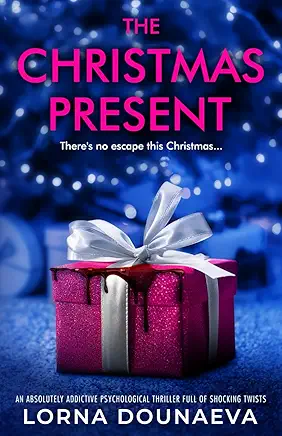
The Christmas Present by Lorna Dounaeva

A family already pushed to breaking point escapes to a remote Highland cabin after weeks of harassment from a group of relentless teenage tormentors.

The snowy retreat promises safety, but Christmas morning brings a horrifying discovery in a child’s stocking that proves the danger has followed them.

Fear closes in as the parents realise there is no distance great enough to shield them from the threat hovering just beyond the trees.

What follows is a tense, escalating fight for survival in a place meant for peace, raising the question of what their pursuers truly want—and how far they will go to get it.


The Christmas Party by Mikayla Davids

A stormy December night sets the stage for a tense family gathering at a remote countryside hotel, where old wounds from a decade-old tragedy still linger.

Beneath the pretence of reconciliation, each guest carries secrets and motives that cast suspicion across every corner of the celebration.

When midnight strikes and a family member is found dead at the foot of the marble staircase, the reunion becomes a hunt for a killer hidden among them.

This gripping festive thriller delivers tension, misdirection, and a twisty locked-room mystery perfect for winter nights.


Twice on Christmas by McGarvey Black

A brutal attack after midnight mass leaves a young woman fighting for her life, and the discovery she is pregnant forces a decision that will shape every moment that follows.

Years later, she is rebuilding a quiet life with her daughter, the only bright thing to emerge from the violence she endured.

But her attacker, a predator who strikes every Christmas Eve and Christmas Day, is still free — and now he knows he has a child.

What follows is a tense, relentless battle for safety as mother and daughter face a threat that has returned with terrifying purpose.


The Christmas Guest by Sally Royer-Derr

A charming new tenant brings romance and excitement into a woman’s quiet coastal guesthouse, turning her holiday season into something that feels almost magical.

Yet behind the warmth and chemistry, unanswered questions grow as late-night calls and secretive behaviour hint that her guest is not quite who he claims to be.

At the same time, she guards hidden truths of her own, creating a delicate balance of affection, suspicion, and danger.

This festive thriller blends cosy romance with dark twists, delivering a playful yet tense read perfect for holiday nights.


Frost and Fate by Elisa D. Daniels

A broken-down car in a fierce snowstorm forces a couple to accept shelter from a stranger in a remote cabin, a decision made out of sheer necessity as the world outside disappears beneath the weather.

Once inside, the atmosphere changes, and their host’s behaviour raises questions that turn discomfort into fear.

The isolation of the cabin and the secrets it hides soon eclipse the storm, leaving the couple trapped with someone far more dangerous than the freezing night.

What follows is a tense fight for survival as a simple act of kindness unravels into something far darker.


Alone for Christmas by Foxglove Lee

A teacher hoping for a quiet Christmas finds her plans destroyed when an intruder slips into her home, turning her solitary holiday into a haunting ordeal.

With her husband abroad, every creak and shadow becomes a threat, and the break-in forces her to confront a past she has tried to bury.

The intruder’s actions prove they know far more about her than any stranger should, pushing her into a terrifying test of resilience.

This tense domestic thriller builds chilling momentum as a peaceful night unravels into something far more dangerous.


Christmas Roulette Massacre by Jehttps://geni.us/TpqxURssica Lynn Sorensen

A woman hoping for a final peaceful Christmas with her father finds herself drawn into a sinister game while housesitting for family friends.

At first, the handwritten notes left by a supposed secret admirer seem odd but harmless, each one asking her to choose between two names.

When those choices lead to real deaths, she realises someone from her past is manipulating her, turning the season of giving into a brutal test of guilt and consequence.

What follows is a chilling countdown of twisted “gifts” as a vengeful puppet master forces her to confront the price of every decision.


Secret Santa by Amy Tackett

A group of old friends reunites for their yearly holiday ritual, hoping to make peace with the past after the sudden death of someone who once belonged to their circle.

A snowstorm traps them together, and the appearance of mysterious wrapped boxes under the tree turns the reunion into something far more sinister.

With an unknown Secret Santa in their midst, each gift forces them to confront buried grudges and the cruelty that once bound them together.

This dark, atmospheric thriller twists a familiar tradition into a deadly reckoning where survival depends on uncovering the truth about their shared past.


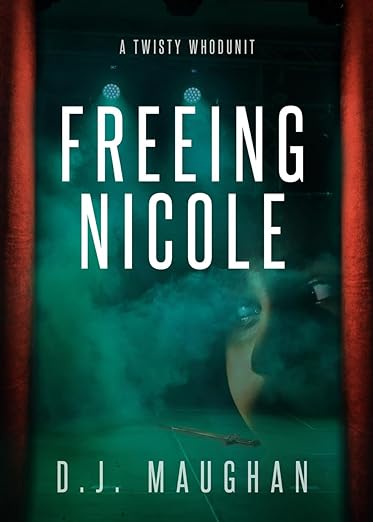
Freeing Nicole by D.J. Maughan

A school celebration descends into horror when a student in the special needs class is killed, leaving the community shaken and a young eyewitness traumatised into silence.

Nicole’s inability to speak becomes the centre of the investigation, as detectives uncover unsettling secrets hidden within the school and realise her knowledge may put her in danger.

Her mother, desperate to reach her, turns to questionable allies while pressure mounts and threats close in.

This emotional, twist-filled mystery builds tension around a vulnerable girl who may hold the truth—and the risk that someone will stop at nothing to keep her quiet.


The Silent Night by Flavia Labre

A journalist stranded on a snow-covered mountain road accepts shelter from a quiet couple whose farmhouse seems like her only chance of surviving the storm.

What begins as kindness quickly turns unsettling when she notices signs that someone else may be living there — a locked door, a child’s hair clip, and conversations that fall silent when she enters the room.

As the storm worsens, so does her suspicion, driving her to push for answers that the couple clearly doesn’t want her to find.

This chilling Christmas thriller builds tension with every clue, trapping both protagonist and reader in a house where nothing is as it seems.


I hope this selection of seasonal suspense has given you plenty of chilling tales to enjoy as the nights grow longer and the snow begins to fall.

Whether you’re curled up by the tree with a mug of something warm or stealing a quiet moment during the holiday rush, these twist-filled stories should keep you turning pages well past bedtime.

Wishing you a merry Christmas filled with cosy moments, gripping reads, and just the right amount of seasonal shivers.

Here’s to a winter stacked with brilliant books and unforgettable twists.


Note: This post uses affiliate links.

Gone By Christmas Release Announcement – New Domestic Thriller by J. Cronshaw

Gone By Christmas, a tense domestic thriller by J. Cronshaw, is now available.
Follow Sian Matthews as her daughter vanishes after Lancaster’s Christmas Market and family secrets rise to the surface.
A gripping novella perfect for readers who enjoy fast, chilling page-turners.

My new domestic thriller novella, Gone By Christmas, is out today!

This story follows Sian Matthews as her world cracks open after her fifteen-year-old daughter fails to return from Lancaster’s Christmas Market.

A single blue mitten on the doorstep is the first sign that something is terribly wrong.

Sian expects Courtney to walk back through the door after her choir performance.

Instead she finds a photograph that chills her and a silence she can’t explain.

The police soon turn their attention to Courtney’s father, and every new piece of evidence tightens the noose around their family.

Sian then begins receiving messages that point to a far older lie.

Someone close to her knows exactly what happened that night.

A thriller for a single evening

Gone By Christmas is a sharp, tense novella designed to be read in one sitting.

It’s set in the cold streets of Lancaster in the run-up to Christmas Day, where every step Sian takes drags her deeper into danger.

This is a story about trust, fear, and the cracks that appear when a family’s secrets begin to show.

If you enjoy dark, fast-paced domestic thrillers with emotional stakes and a tight focus, this one is for you.

You can start reading tonight and see for yourself what really happened to Courtney Matthews.

A 3D promotional image for the psychological thriller Gone By Christmas by J. Cronshaw. The image features both a Kindle and a paperback version of the book cover. The cover shows a traditional British house at night, with two warmly lit windows and a decorated Christmas tree glowing outside. Snow falls gently under a dark winter sky. The title Gone By Christmas is displayed in bold yellow letters, with the tagline above reading “Could this Christmas be her last?” The author’s name appears at the bottom in white capital letters.

Opening Chapter of Gone By Christmas by J. Cronshaw – Read the First Chapter

Read the full opening chapter of Gone By Christmas by J. Cronshaw. A tense Lancaster-set Christmas thriller where a mother realises her daughter hasn’t come home from her choir performance and the night spirals into fear, cold streets and unanswered questions.

Lancaster Christmas Market glows against the December cold, fairy lights strung between wooden stalls that smell of mulled wine and roasted chestnuts. I edge the car through streets clogged with shoppers bundled in scarves and woolly hats, their breath steaming in the freezing air.

Courtney hums beside me—the alto line from tonight’s performance, something classical I don’t recognise. Her fingers tap the rhythm against her knee, and I catch the familiar tangle of pride and worry that comes with watching your fifteen-year-old prepare to sing solo in front of strangers.

“You’ve got your phone?”

She rolls her eyes without stopping the humming. “Yes, Mum.”

“And your gloves?”

She pulls one blue mitten from her coat pocket and waves it at me like evidence. “See? Not completely hopeless.”

I pull into the drop-off zone beside the market entrance, where the choir coordinator stands with a clipboard tucked under one arm. Mrs Galloway waves us over, her smile bright enough to power the Christmas lights.

Courtney climbs out, cheeks flushed with excitement and nerves. The cold hits us both like a slap, and I get out to hug her even though she pretends to hate the fuss.

“I’ll be home by nine,” she says into my shoulder. “We finish at half eight, then Mrs G needs to do the register.”

“Stick with the group when you’re walking back to the car park. Don’t wander off.”

She pulls away and gives me the tired smile of a teenager who’s heard this twenty times. “I know, Mum. It’s Lancaster, not Gaza.”

I watch her join the line of blue-scarfed singers gathering beneath the bandstand lights. The first little needle of unease touches my ribs as she disappears into the crowd, but I tell myself that’s just what mothers do. We manufacture worry from thin air because the alternative is admitting we can’t actually protect them from everything.

The drive home takes longer than usual. Light flurries of snow catch in the headlights, and the radio hums Christmas classics I barely hear over the heater’s rattle. I force myself not to hover around the market like one of those helicopter parents I used to write sneering pieces about when I was still at the Lancashire Evening Post.

Our semi sits at the end of a terrace that was probably considered modern when it was built in the seventies. I pull up outside and sit for a moment, gripping the steering wheel tighter than necessary. The house looks cold and unwelcoming with all the lights off, but that’s probably just the weather.

I force myself inside and switch on the hallway lights. The central heating kicked in an hour ago, but the air still feels sharp enough to make me shiver.

I put the kettle on and walk around the kitchen wiping down surfaces that don’t need cleaning. There’s a work email from the council about a press release for the new recycling initiative—something about bin collection changes that will inevitably cause three weeks of angry phone calls from residents who can’t be bothered to read the leaflet properly.

I type a reply suggesting we add clearer graphics to the information pack, though my attention keeps drifting to the clock above the sink. Seven forty-five. Courtney will be on stage by now, probably fighting the nerves that always make her hands shake before she sings.

I fold a towel that doesn’t need folding and move wet clothes from the washing machine to the tumble dryer, though they could easily wait until tomorrow. My mind keeps returning to the market—the crowds, the way Courtney’s face lit up when she saw her friends, the slight tremor in her voice when she said goodbye.

At eight forty, I text her: “All good?”

The message shows as delivered but stays unread. Probably in her coat pocket on silent, which is exactly what I told her to do so she wouldn’t be distracted during the performance.

I try to watch the news, but the words slide past without sticking. Something about transport strikes and Christmas shopping figures that should matter more than they do. My knee bounces against the sofa arm as I check the time again.

Nine fifteen.

They should have finished by now. The register doesn’t take half an hour, even with Mrs Galloway’s legendary attention to detail.

I pace the length of the living room twice, then check the front window as though Courtney might materialise from the darkness like some Christmas miracle. The street stays empty.

At half past nine, I call her mobile.

It rings twice, then jumps straight to voicemail. Her recorded voice sounds younger than she does in real life, cheerful in that way that makes my stomach knot.

I grab my keys from the side table and head for the door without consciously deciding to move. The cold hits me like a physical blow as I step outside, sharp enough to make my eyes water.

The drive back to the market takes half the time it should. I park badly and walk too fast through crowds that have thinned since earlier. Couples share bags of hot nuts, and teenagers cluster around the mulled wine stall, but there’s no sign of blue scarves or choir coordinators.

The bandstand area is empty except for a stallholder dismantling a row of fairy lights. He’s probably my age, with the efficient movements of someone who does this every year.

“Excuse me.” My voice comes out sharper than I intended. “Did you see a choir performing here earlier? Girls in blue scarves?”

He winds cable around his forearm without looking up. “They finished ages ago, love. Hour at least.”

My pulse thunders in my ears. “Did you see where they went?”

“Sorry. I was dealing with my own stuff.”

I walk the route Courtney should have taken to meet the other parents at the car park. Check around the bench where the choir usually waits for stragglers. Two teenage girls are packing instruments into cases, but they shake their heads when I describe Courtney.

The market feels suddenly overwhelming—too loud, too bright, too full of people who aren’t my daughter. I swallow back the rising panic and try to think like the journalist I used to be. Facts first. Emotions later.

I call Courtney again. Same abrupt jump to voicemail that makes my hands shake.

I try Steve, though I know he’s working late. His phone rings out without answer, which means he’s either up a ladder in Kendal, or in one of his moods where he can’t be bothered with family obligations.

My breath starts coming too fast as the cold settles into my bones. The rational part of my mind lists possibilities: she’s gone for chips with friends, her phone’s died, she’s lost track of time. Fifteen-year-olds aren’t known for their punctuality.

But the mother part of my mind whispers darker alternatives that I refuse to entertain.

I walk home street by street, scanning alley mouths and doorways for any sign of a blue scarf or familiar silhouette. Check the late-night shops and the bus stops, though Courtney never takes the bus when she can walk.

I reach our front gate with hands that shake too much to fit the key properly. Open the door hoping against hope that she might be inside already, kettle on and homework spread across the kitchen table.

The house is silent.

The hallway stretches ahead, empty and cold.

“Courtney?” I call into the darkness. “Courtney, are you home?”

Nothing answers.

A 3D promotional image for the psychological thriller Gone By Christmas by J. Cronshaw. The image features both a Kindle and a paperback version of the book cover. The cover shows a traditional British house at night, with two warmly lit windows and a decorated Christmas tree glowing outside. Snow falls gently under a dark winter sky. The title Gone By Christmas is displayed in bold yellow letters, with the tagline above reading “Could this Christmas be her last?” The author’s name appears at the bottom in white capital letters.