Discover twelve gripping Christmas domestic thrillers packed with twists, secrets, and seasonal suspense. Perfect for readers who love psychological thrillers, domestic noir, and dark winter mysteries. Find your next festive page-turner with this holiday reading guide.
The season may sparkle with lights and cosy jumpers, but nothing matches the thrill of settling in with a tense, twist-filled story set against the backdrop of winter.
These festive domestic thrillers bring secrets, suspicion, and snow-dusted dread to your Christmas reading stack.
Each title delivers sharp tension, family drama, and the creeping sense that danger might be hiding behind tinsel and fairy lights.
Whether you want a missing-child mystery, a dark tale of a family gathering gone wrong, or a psychological thriller set in a seemingly perfect village, this guide rounds up twelve gripping Christmas domestic thrillers perfect for holiday reading.
These stories combine seasonal atmosphere with heart-pounding suspense, making them ideal for fans of domestic noir, psychological tension, and twisty Christmas mysteries.
If you’re searching for the best Christmas thrillers to read this holiday season, these twelve festive favourites will keep you turning pages long into the night.
Gone By Christmas by J. Cronshaw
A missing teenager turns a festive evening into a nightmare when a single blue mitten and a sinister photograph appear on the doorstep.
As suspicion closes in on her husband, the mother at the centre of the story begins receiving messages that suggest betrayal within her own home.
With Christmas Day approaching, every clue drags her further into danger as she races through wintry Lancaster to uncover what really happened.
This sharp, fast-paced novella delivers gripping tension for readers wanting a dark Christmas thriller they can finish in one sitting.
A knock at the door on a stormy December night shatters a family gathering when police reveal the protagonist’s husband has been found dead.
What begins as a cosy Christmas celebration spirals into suspicion as every relative becomes a potential suspect, each hiding secrets that cast long shadows over the night before.
With guilt, grief, and mistrust tightening around her, she’s forced to confront the chilling possibility that someone within her own family may have killed him.
This tense festive thriller blends domestic drama with a gripping mystery perfect for holiday reading.
A family already pushed to breaking point escapes to a remote Highland cabin after weeks of harassment from a group of relentless teenage tormentors.
The snowy retreat promises safety, but Christmas morning brings a horrifying discovery in a child’s stocking that proves the danger has followed them.
Fear closes in as the parents realise there is no distance great enough to shield them from the threat hovering just beyond the trees.
What follows is a tense, escalating fight for survival in a place meant for peace, raising the question of what their pursuers truly want—and how far they will go to get it.
A stormy December night sets the stage for a tense family gathering at a remote countryside hotel, where old wounds from a decade-old tragedy still linger.
Beneath the pretence of reconciliation, each guest carries secrets and motives that cast suspicion across every corner of the celebration.
When midnight strikes and a family member is found dead at the foot of the marble staircase, the reunion becomes a hunt for a killer hidden among them.
This gripping festive thriller delivers tension, misdirection, and a twisty locked-room mystery perfect for winter nights.
A brutal attack after midnight mass leaves a young woman fighting for her life, and the discovery she is pregnant forces a decision that will shape every moment that follows.
Years later, she is rebuilding a quiet life with her daughter, the only bright thing to emerge from the violence she endured.
But her attacker, a predator who strikes every Christmas Eve and Christmas Day, is still free — and now he knows he has a child.
What follows is a tense, relentless battle for safety as mother and daughter face a threat that has returned with terrifying purpose.
A charming new tenant brings romance and excitement into a woman’s quiet coastal guesthouse, turning her holiday season into something that feels almost magical.
Yet behind the warmth and chemistry, unanswered questions grow as late-night calls and secretive behaviour hint that her guest is not quite who he claims to be.
At the same time, she guards hidden truths of her own, creating a delicate balance of affection, suspicion, and danger.
This festive thriller blends cosy romance with dark twists, delivering a playful yet tense read perfect for holiday nights.
A broken-down car in a fierce snowstorm forces a couple to accept shelter from a stranger in a remote cabin, a decision made out of sheer necessity as the world outside disappears beneath the weather.
Once inside, the atmosphere changes, and their host’s behaviour raises questions that turn discomfort into fear.
The isolation of the cabin and the secrets it hides soon eclipse the storm, leaving the couple trapped with someone far more dangerous than the freezing night.
What follows is a tense fight for survival as a simple act of kindness unravels into something far darker.
A teacher hoping for a quiet Christmas finds her plans destroyed when an intruder slips into her home, turning her solitary holiday into a haunting ordeal.
With her husband abroad, every creak and shadow becomes a threat, and the break-in forces her to confront a past she has tried to bury.
The intruder’s actions prove they know far more about her than any stranger should, pushing her into a terrifying test of resilience.
This tense domestic thriller builds chilling momentum as a peaceful night unravels into something far more dangerous.
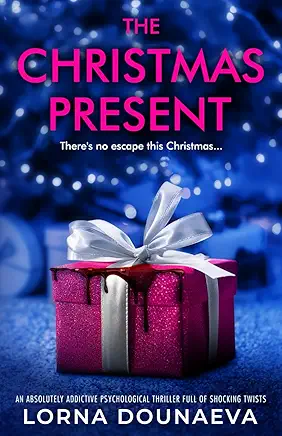
A woman hoping for a final peaceful Christmas with her father finds herself drawn into a sinister game while housesitting for family friends.
At first, the handwritten notes left by a supposed secret admirer seem odd but harmless, each one asking her to choose between two names.
When those choices lead to real deaths, she realises someone from her past is manipulating her, turning the season of giving into a brutal test of guilt and consequence.
What follows is a chilling countdown of twisted “gifts” as a vengeful puppet master forces her to confront the price of every decision.
A group of old friends reunites for their yearly holiday ritual, hoping to make peace with the past after the sudden death of someone who once belonged to their circle.
A snowstorm traps them together, and the appearance of mysterious wrapped boxes under the tree turns the reunion into something far more sinister.
With an unknown Secret Santa in their midst, each gift forces them to confront buried grudges and the cruelty that once bound them together.
This dark, atmospheric thriller twists a familiar tradition into a deadly reckoning where survival depends on uncovering the truth about their shared past.
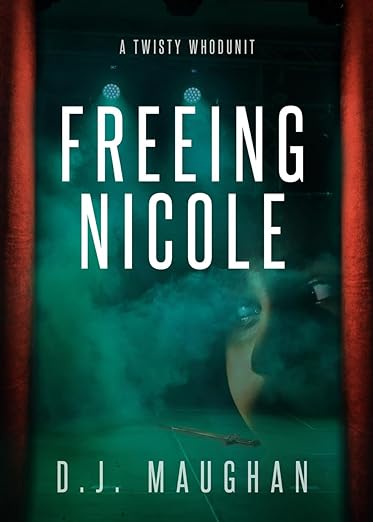
A school celebration descends into horror when a student in the special needs class is killed, leaving the community shaken and a young eyewitness traumatised into silence.
Nicole’s inability to speak becomes the centre of the investigation, as detectives uncover unsettling secrets hidden within the school and realise her knowledge may put her in danger.
Her mother, desperate to reach her, turns to questionable allies while pressure mounts and threats close in.
This emotional, twist-filled mystery builds tension around a vulnerable girl who may hold the truth—and the risk that someone will stop at nothing to keep her quiet.
A journalist stranded on a snow-covered mountain road accepts shelter from a quiet couple whose farmhouse seems like her only chance of surviving the storm.
What begins as kindness quickly turns unsettling when she notices signs that someone else may be living there — a locked door, a child’s hair clip, and conversations that fall silent when she enters the room.
As the storm worsens, so does her suspicion, driving her to push for answers that the couple clearly doesn’t want her to find.
This chilling Christmas thriller builds tension with every clue, trapping both protagonist and reader in a house where nothing is as it seems.
I hope this selection of seasonal suspense has given you plenty of chilling tales to enjoy as the nights grow longer and the snow begins to fall.
Whether you’re curled up by the tree with a mug of something warm or stealing a quiet moment during the holiday rush, these twist-filled stories should keep you turning pages well past bedtime.
Wishing you a merry Christmas filled with cosy moments, gripping reads, and just the right amount of seasonal shivers.
Here’s to a winter stacked with brilliant books and unforgettable twists.
Gone By Christmas, a tense domestic thriller by J. Cronshaw, is now available.
Follow Sian Matthews as her daughter vanishes after Lancaster’s Christmas Market and family secrets rise to the surface.
A gripping novella perfect for readers who enjoy fast, chilling page-turners.
My new domestic thriller novella, Gone By Christmas, is out today!
This story follows Sian Matthews as her world cracks open after her fifteen-year-old daughter fails to return from Lancaster’s Christmas Market.
A single blue mitten on the doorstep is the first sign that something is terribly wrong.
Sian expects Courtney to walk back through the door after her choir performance.
Instead she finds a photograph that chills her and a silence she can’t explain.
The police soon turn their attention to Courtney’s father, and every new piece of evidence tightens the noose around their family.
Sian then begins receiving messages that point to a far older lie.
Someone close to her knows exactly what happened that night.
Learn how to request and borrow J. Cronshaw’s thrillers and fantasy ebooks from your local library using OverDrive, BorrowBox, cloudLibrary and other digital lending services. Step-by-step guide for UK and international readers, including how to request titles not yet in your library’s catalogue.
You don’t have to buy all my books to read them.
Many of my ebooks are available for libraries to stock as digital loans.
If your library uses one of these, you can often borrow my books straight to your phone, tablet, e-reader or computer.
Sometimes the titles may not appear in your local catalogue right away.
In most cases you can request that the library orders them in for you.
Why my books show up in different library apps
I distribute my ebooks through several library platforms, including OverDrive, cloudLibrary and BorrowBox.
Librarians can then choose to buy copies for their own digital collections.
Each library picks which platforms it uses.
So your local authority might run everything through OverDrive and Libby, use BorrowBox, use cloudLibrary, or a mix.
Using OverDrive and Libby
OverDrive is one of the largest library ebook services in the world, and Libby is their main reading app.
Here’s how to try to borrow one of my books through OverDrive or Libby.
Sign up for a library card with your local public library if you don’t already have one.
Download the Libby app to your device, or go to your library’s OverDrive website.
Open Libby or the OverDrive site and search for your library by name.
Log in with your library card number and PIN.
Use the search box to look for “J. Cronshaw” or the title you want.
If the book is available, tap or click Borrow and it will be added to your loans.
If the book is not listed, look for an option such as “Recommend”, “Notify Me”, or “Tag as wish list”.
Some libraries use these lists to decide what to buy next.
If you still can’t see a way to request it in-app, you can usually send a purchase suggestion through your library’s website or ask staff at the desk.
Using BorrowBox
BorrowBox is widely used by libraries in the UK, Ireland, Australia and New Zealand.
To try to borrow my books through BorrowBox, follow these steps.
Join your local public library and make sure your card is active.
Install the free BorrowBox app from your device’s app store, or visit the BorrowBox website your library links to.
Open the app, choose your library service from the list, and log in with your card number and PIN.
Use the search bar to look for “J. Cronshaw” or a specific title.
If the book is in the collection and currently available, select Borrow and confirm the loan.
If all copies are on loan, you can usually place a reservation so you get a notification when it’s free.
If the book doesn’t appear at all, ask your library if they can order it through BorrowBox.
Because the books are already in BorrowBox’s catalogue, librarians should be able to add them if budgets allow.
Using cloudLibrary (Bibliotheca)
cloudLibrary is another major platform that lets libraries lend ebooks and audiobooks.
To use cloudLibrary, get a valid library card from a service that offers cloudLibrary.
Download the cloudLibrary app from your app store or visit your library’s cloudLibrary page.
Open the app, pick your country, then your library, and log in with your card number and PIN.
Search for “J. Cronshaw” or a title.
If your library has already bought the book, you can borrow it with a tap.
If it hasn’t, cloudLibrary often lets you “Include books not in library” and add them to a wish list.
That wish list is visible to library staff and helps them decide what to order.
If you can’t see that option, you can still request the book by using your library’s online recommendation form or speaking to staff.
What about Tolino?
Tolino itself is a network of ebook shops and devices used mainly in German-speaking countries.
It is more of a retail and hardware brand than a library service.
However, some Tolino eReaders can work with library platforms such as OverDrive if your library supports them, so you may be able to read borrowed titles on a Tolino device.
If you use a Tolino, your best bet is to check which library app your local service uses.
Borrow the ebook through that app.
Then follow their instructions for reading on a compatible eReader.
If you can’t find the book in your library
Even if a platform lists my books in its master catalogue, your local library still has to decide to buy them.
If you search and nothing comes up, check that you are spelling “J. Cronshaw” correctly.
Try searching by title instead of author.
Look for “show all titles” or “include books not in library” toggles.
If that fails, go to your library’s website and look for a page called something like “Suggest a purchase”, “Recommend a title” or “Request a book”.
Put in the book title, my name, and that it is available to libraries through OverDrive / BorrowBox / cloudLibrary.
You can also walk into your branch and ask a librarian.
Staff can usually check the supplier catalogue and order copies if they have the budget.
Quick checklist
Here’s a simple checklist you can follow.
Get a valid library card.
Find out which ebook app your library uses.
Install the app and log in with your card number and PIN.
Search for “J. Cronshaw” or the title you want.
If the book shows up, borrow or reserve it.
If it doesn’t, use the app’s wish-list or recommendation feature, or ask your librarian to order it.
That way you support both your local library and my writing, all while reading for free.
Announcing the release of What You Did, a tense British domestic thriller about buried secrets, rising suspicion, and a family pushed to breaking point.
Read the full blurb and find out how to get the paperback now and pre-order the Kindle edition ahead of its 21 November launch.
Hello from Morecambe!
I’m thrilled to let you know that my new domestic thriller, What You Did, is out now.
This one digs into the secrets we carry, the lies we tell ourselves, and the danger that comes when the truth refuses to stay buried.
Everyone has secrets.
Some won’t stay buried.
Five years ago, Sarah Whitfield watched her brother-in-law fall from the cliffs of Clougha Pike, carrying the weight of their affair into the silence that followed.
The inquest called it an accident.
Someone disagrees.
Notes begin appearing in her bag, on her car, inside her locked house—each one repeating the same cold message:
I KNOW WHAT YOU DID.
As the warnings tighten, her husband grows distant and her son studies her with a wary, unsettling caution. Her memories of that night shift, leaving her unsure whether she tried to save David—or let him fall.
Someone wants the truth exposed. Someone intends to make her pay.
What You Did is a tense, claustrophobic domestic thriller about guilt, manipulation, and the secrets that fracture families.
It’s available now on paperback and Kindle/Kindle Unlimited.
Thank you, as always, for reading and supporting my work. I hope What You Did keeps you turning the pages long into the night.
I Know What I Saw by J. Cronshaw is out now — a gripping British psychological thriller set in Lytham, Lancashire. Available on Kindle, Paperback, and Kindle Unlimited, and also through library apps like BorrowBox and OverDrive.
My new psychological thriller, I Know What I Saw, is out today.
This one is dark, tense, and set right here in Lancashire. If you enjoy domestic noir and British psychological suspense with a sharp, realistic edge, I think you’ll love it.
The story
“Mum, I saw Dad kill Kevin Jacobs.”
Seven words that shatter a family.
Vicky McKeating wants to believe her husband is innocent. Her daughter, Hannah, won’t back down. As gossip spreads along Agnew Street and police cars arrive at the entrance to Serpentine Walk, the question becomes impossible to ignore.
Who is telling the truth?
Set in the quiet seaside town of Lytham, I Know What I Saw explores family loyalty, small-town suspicion, and the lies we tell to protect the people we love.
Where to get it
You can read I Know What I Saw right now:
Kindle – available worldwide.
Paperback – order from Amazon and other major retailers.
Kindle Unlimited – free to read if you’re a KU subscriber.
To celebrate launch week, the eBook is 99p / 99c for a limited time.
Borrow it from your library
If you prefer reading through your library, you can request I Know What I Saw on BorrowBox, OverDrive, or your library’s own eBook service.
Some libraries add new titles automatically, while others need a quick request at the desk or through the app. Simply search for I Know What I Saw by J. Cronshaw and, if it isn’t there yet, ask your librarian to add it.
Supporting your local library helps other readers discover new authors, and it’s one of the best ways to keep stories like this accessible to everyone.
Why this book matters to me
This story began with a single image: a teenage girl standing in a kitchen, calmly telling her mother she’s witnessed a murder. From that moment, I wanted to write about how truth can fracture even the closest families, and how a small community can turn claustrophobic when everyone’s watching.
Lytham, with its neat red-brick terraces and quiet respectability, became the perfect setting. I walked the real Agnew Street and Serpentine Walk while writing it, soaking up the atmosphere that eventually made its way into every scene.
Thank you for your support
If you’ve been following my work, you’ll know how much I appreciate every reader who picks up my books, leaves a review, or tells a friend. Your support allows me to keep writing full-time and sharing stories set in the places we know.
So, whether you grab it on Kindle, order the paperback, borrow it through Kindle Unlimited, or request it from your library—I hope I Know What I Saw keeps you turning the pages late into the night.
You can find your copy here: [Amazon link or your preferred retailer link].
A look at why we’re so drawn to toxic relationships in domestic thrillers, exploring trust, betrayal and the unsettling psychology behind modern British domestic noir, with examples from Gone Girl, The Family Upstairs, Our House, The Cliff House, Behind Closed Doors and Lies.
There’s something irresistible about watching a relationship fall apart on the page.
Not because we enjoy cruelty. Not because we want to see people suffer. But because domestic-thriller relationships mirror a fear many of us carry quietly: the fear that the person we love most might be the one who harms us.
Domestic noir presses its thumb on that bruise with precision and patience. It turns the intimate into the dangerous.
We feel the tension build in every whispered argument. We sense the dread as trust begins to slip. We lean forward because we recognise the signs before the characters do.
Toxic relationships in fiction grip us because they feel uncomfortably plausible. They don’t appear with fangs and claws. They start with charm. They start with tenderness. They start with a partner who seems perfect.
Then the cracks appear: a comment delivered too sharply, a lie told too smoothly, a pattern of behaviour that suddenly feels wrong once we stop making excuses.
Domestic noir thrives in this territory. It sets these corrosive relationships in places that look utterly safe—semi-detached houses, school playgrounds, quiet terraces lined with hanging baskets.
We recognise the geography. We recognise the social expectations. We recognise the pressure to keep up appearances. That familiarity makes every betrayal hit harder.
Gillian Flynn’s Gone Girl remains one of the clearest examples. Amy and Nick’s marriage looks enviable from the outside—modern, witty, balanced. The story’s power comes from showing how much of that is a performance.
The mask slips slowly. The carefully controlled version of the truth begins to shift. We find ourselves asking the same questions the characters avoid: when did the lies start, where did the rot begin, and how well can we ever know the person we share a bed with.
British writers have taken this tension and shaped it with their own sensibilities.
Lisa Jewell’s The Family Upstairs captures it beautifully. We’re drawn into a house full of secrets, a family that looks successful on the surface, a relationship that curdles quietly behind closed doors.
The manipulation feels measured rather than theatrical. The danger builds in small, steady steps. We feel the unease because the setting feels familiar. This could be any house on any British street.
Louise Candlish approaches betrayal from another direction in Our House. Instead of watching a marriage collapse from the inside, we see the aftermath of trust destroyed by deceit.
A woman comes home to find strangers moving into her house. Her husband has sold it without telling her.
The horror isn’t supernatural. It’s bureaucratic. It’s legal. It’s wrapped in estate-agent language and paperwork. That makes it even more chilling. It shows how betrayal can be executed with a signature instead of a weapon.
Amanda Jennings explores toxic connection from a different angle in The Cliff House.
A young girl becomes obsessed with a glamorous family living nearby. The friendship feels intoxicating at first. Then it becomes clear that admiration has shifted into something darker. Jennings understands the power imbalance that can hide inside even the warmest moments. We feel the anxiety long before the characters do.
Part of the genre’s appeal lies in recognition. Many of us know what it is to second-guess someone’s motives. We know what it feels like when a partner’s affection shifts. We understand the silent dread of sensing something is wrong but having no proof.
Domestic thrillers tap into those universal fears. They give shape to the doubts and suspicions we rarely say aloud. They let us witness the unravel without paying the price.
These stories also offer something like release. They allow us to walk through the worst possibilities from the comfort of our sofa. They let us sit with fear without being trapped by it. They offer control in situations where control is usually the first thing to vanish.
There’s comfort in watching a character face manipulation and find a way out. There’s reassurance in seeing someone survive what might have destroyed them.
B.A. Paris captures this balance with remarkable clarity in Behind Closed Doors.
On the surface, Grace and Jack are the perfect couple—successful, elegant, deeply in love.
The truth is far more disturbing.
Jack’s control creates a slow, suffocating tension. We feel every moment of Grace’s fear. We feel every flicker of her resistance.
The story lands because the threat doesn’t come from a stranger. It comes from the person who should have been her safest place.
Modern life demands that we perform stability. Couples post smiling photos online. Families curate their lives for social media. Neighbours nod politely even when everything is falling apart.
Domestic thrillers take that performance and show us what might lurk beneath it. They turn the mask into the menace. They remind us that the scariest lies often look polite.
The best domestic thrillers take the rawness of betrayal and set it against the backdrop of everyday life.
They show the slow drip of dread. They show the subtle shift from affection to control. They show the moment a character realises the person they trusted has rewritten the rules.
We stay hooked because we want to see whether they break or fight. We want to know whether the truth will surface. We want to know whether the house will still feel like a home by the end.
Toxic relationships in fiction captivate us because they reflect something deeply human. They remind us how fragile trust can be. They remind us how strong we can become when it breaks. They give us darkness in places we recognise. They give us endings we hope for in life but don’t always get.
That’s why domestic noir keeps pulling us back. Not just for the shock. Not just for the twist. But for the unsettling thrill of watching love turn.
Discover why J. Cronshaw set his psychological thriller I Know What I Saw in Lytham, Lancashire—a town of wealth, gossip, and hidden secrets.
When I sit down to write a psychological thriller, location is never just a backdrop—it’s a character in its own right.
The streets, the houses, the way light falls at dusk, the gossip that passes over garden fences—all of it shapes the tension.
For I Know What I Saw, I wanted a setting that held contrasts. Somewhere beautiful yet claustrophobic. Respectable on the surface, but full of shadows beneath.
Every time I visit, I’m struck by the town’s quiet elegance. Lytham isn’t loud about its wealth; it’s the sort of place where people have nice things and good manners, and both are kept polished. The lawns are trimmed, the windows gleam, and everyone knows everyone—at least on a nodding level.
It has that small-town English charm that looks idyllic from the outside, but which, in fiction, is perfect for secrets.
The main street is all boutique shops, cafés with polished brass handles, and bakeries that still use the word “artisan” without irony. There’s a rhythm to life here that feels safe and contained. That containment was exactly what I needed. I wanted my protagonist, Vicky McKeating, to live in a world where appearances matter, where the thought of neighbours whispering carries genuine weight.
Lytham has a strong sense of community, but it’s the kind that can turn sharp when something goes wrong. It’s a place of smiles in passing, charity events, and local Facebook groups that know everything before the police do.
When a body is found down a familiar footpath, as happens early in the novel, everyone feels they have the right to an opinion. In a town this size, anonymity doesn’t exist. That constant social observation—the sense that you’re always being seen—feeds straight into the paranoia at the heart of the story.
Two real locations anchor the story: Agnew Street and Serpentine Walk. I spent time walking those streets, noting the curve of the pavements and the way the light shifts in the late afternoon. Agnew Street, with its rows of red-brick terraces, feels immediately familiar to anyone who’s lived in a northern seaside town. It’s the kind of street where you can hear your neighbour’s washing machine through the wall, where curtains twitch when an ambulance drives past.
I placed the McKeating family’s house halfway down the street, between the respectable retirees and the young families who’ve stretched themselves to get onto the property ladder.
It’s a street full of quiet aspiration—people proud of what they’ve built, protective of their routines. That pride becomes important when scandal hits. No one wants police tape ruining the view.
Serpentine Walk, meanwhile, is a narrow cut-through that snakes between the terraces and the railway car park. In daylight, it’s unremarkable—a shortcut for commuters heading to the station. But at night, the atmosphere changes. The trees lean in, the lighting fades, and the sound of the trains becomes an uneasy pulse.
It’s a perfect place for something awful to happen.
When Vicky’s daughter, Hannah, claims she saw her father there, standing over their neighbour Kevin’s body, the setting adds its own chill.
The name itself—Serpentine Walk—couldn’t be more apt. It carries a sense of menace, of something winding and hidden. That subtle unease is what I wanted the whole novel to feel like. The path becomes a physical representation of doubt: twisting, shadowed, and never quite revealing what’s around the bend.
Lytham, like many affluent towns, has a particular kind of self-confidence. People move there for stability, good schools, and the sense that life can be controlled.
It’s a place where neighbours notice when you paint your front door a new colour, or when you stop turning up to the Friday-night quiz at the pub. It’s a town where reputation matters.
That obsession with image made it the ideal setting for a story about truth and perception.
When Hannah accuses her father of murder, it’s not just a family crisis—it’s a social one. The neighbours whisper. Shopkeepers go quiet. Everyone chooses a side long before the police have said a word.
In small communities like Lytham, gossip moves faster than fact. People tell themselves they’re being supportive while sharpening their stories behind closed doors.
That’s something I’ve seen firsthand, living in Lancashire myself. There’s kindness, yes—but also curiosity, and that very British instinct to keep up appearances. It’s a perfect storm for a domestic thriller.
I wanted readers to feel that tension: the sense of being watched, judged, and politely condemned.
When Vicky goes to the shops after her daughter’s accusation, she feels every stare. The friendly smiles of neighbours start to feel like interrogations. That’s what small-town life can do—it magnifies everything.
There’s also something about the sea nearby. Lytham’s proximity to the coast gives it that mix of openness and isolation.
The flatness of the landscape makes the sky feel enormous, but it also exposes you.
There’s nowhere to hide.
The wind off the estuary cuts through conversations, carrying the smell of salt and diesel. In winter, when the mist rolls in, even familiar streets feel uncertain.
That contrast—the postcard beauty and the underlying bleakness—mirrors the novel’s emotional core.
Families look perfect from a distance. It’s only when you step closer that you see the cracks in the paint, the arguments behind drawn curtains. Lytham offers both—the shine and the shadow.
The sea also plays into the novel’s rhythm. There’s a constant push and pull between calm and chaos, between the stillness of daily life and the tide of suspicion threatening to drown it.
You can feel that same tension when you stand on the promenade on a grey day, the wind snapping at your coat. It’s beautiful, but never completely gentle.
The red-brick house on the cover of I Know What I Saw could easily stand on Agnew Street. A glowing window, a dark sky, a sense that something inside isn’t quite right.
I love writing about ordinary houses because they’re where the most interesting horrors hide. No secret labs, no serial killers lurking in forests—just normal people, normal streets, and lies that start small and grow monstrous.
In a place like Lytham, the details matter. The slightly too-perfect front garden. The clink of glasses from a dinner party next door.
The curtain that moves when you’re not looking. These small domestic details give the story its authenticity.
The reader recognises them because they’ve seen them outside their own windows.
By rooting the novel in a real, recognisable town, I wanted to blur the line between fiction and reality. If a reader drives down Agnew Street or walks along Serpentine Walk, I want them to feel that flicker of unease—that thought of “this could have happened here.”
Setting the story in Lancashire wasn’t just about geography; it was about honesty.
I know the rhythms of these towns—the pride, the reserve, the gossip, the kindness.
Lytham represents a certain type of English respectability that fascinates me. People take pride in being good neighbours, yet the same instinct that builds community can also turn cruel when someone steps outside the unspoken rules.
That’s what domestic noir is all about: the private dramas that happen behind clean curtains. The polite smiles that hide resentment. The silent wars between image and reality. And those things aren’t confined to Lytham—they exist everywhere. But in a small town, there’s no escape.
The wealth in Lytham adds another layer. It’s not obscene, but it’s visible. People work hard to maintain their lifestyles. There’s pressure to conform, to present a certain image.
When scandal erupts, the fall from grace is sharper because there’s more to lose. For a writer, that’s fertile ground.
I could have set I Know What I Saw in any number of northern towns, but none would have given me the same balance of beauty and tension.
Lytham’s streets have history and character. Its residents take pride in their community. It has the sea, the golf club, the sense of safety—and yet, under that calm exterior, there’s something fragile.
When I picture Vicky walking home at dusk, every window glowing against the dark, I see Lytham.
When I think of Hannah’s accusation echoing down Agnew Street, I hear the hush that would follow in a place where everyone knows your name.
And when I imagine Serpentine Walk cordoned off by police tape, I see the same path that hundreds of ordinary people use every day without thinking twice.
That’s why it works. Because it’s real. Because the horror isn’t in some distant city—it’s just down the road, behind one of those immaculate hedges.
Writing about Lytham allowed me to hold up a mirror to the communities many of us live in: places that look perfect until you see what happens when trust breaks. The setting amplifies every theme—appearance versus reality, safety versus danger, love versus fear.
I wanted I Know What I Saw to feel like something that could happen anywhere, but with enough specificity that readers recognise the truth of it.
And there’s something uniquely British about that—our politeness, our gossip, our quiet dread of embarrassment. Lytham gave me all of it in one beautifully contained package.
The next time you walk along a tidy northern street at dusk and see a single window glowing in the dark, think about what might be happening behind the glass.
The Nanny’s Secret, a chilling new domestic thriller by J. Cronshaw, is out now. Perfect for fans of Lisa Jewell, Shari Lapena, and B.A. Paris. Available on Kindle, Kindle Unlimited, and in paperback.
Do you really know who’s living in your home?
I’m thrilled to announce that my new domestic thriller, The Nanny’s Secret, is out now. You can get it on Kindle, read it for free in Kindle Unlimited, or grab the paperback.
When exhausted mother Emma hires Sophie to help with her young son, everything seems perfect.
The house runs smoothly. Her husband is happier. Her son adores the new nanny.
But Sophie knows things she shouldn’t. She hums Emma’s late mother’s lullaby. She answers questions Emma never asked. And she’s always watching.
As Emma’s friends and husband turn against her, she starts to question her own sanity. Is Sophie simply too good to be true—or is she taking Emma’s life piece by piece?
Set in Lancaster, the story brings together the intimacy of small-town life with the creeping dread of domestic suspense. Behind every terraced wall, secrets are waiting to be uncovered.
If you love the tense, twist-filled storytelling of Lisa Jewell, Shari Lapena, and B.A. Paris, you won’t want to miss this one.
Get your copy today. Thank you, as always, for reading and supporting my work. Your reviews and recommendations help these stories find their way to new readers.
Discover why author J. Cronshaw set his psychological thriller The Nanny’s Secret in Lancaster. From the River Lune to Dalton Square, explore how the city’s mix of warmth and shadows inspired this gripping domestic noir.
When I started planning The Nanny’s Secret, I didn’t have to look far for inspiration. I live in Morecambe, and Lancaster is part of my daily rhythm.
My son goes to school there. I meet friends in its cafés and pubs. I cross its streets so often that I sometimes forget how much atmosphere Lancaster holds—until I look at it through a storyteller’s eye.
It’s technically a city, but it has the scale and intimacy of a town. You can walk from one side to the other in less than half an hour. That closeness makes it perfect for a domestic thriller: a place where everyone knows each other—or thinks they do—and secrets travel fast behind terraced walls.
The Lancaster you’ll find in The Nanny’s Secret is the Lancaster I know. The Millennium Bridge over the grey, restless Lune. The canal towpaths winding under dripping stone bridges. Williamson Park, with the Ashton Memorial looming above like a silent witness. Dalton Square at night, where conversations turn sharp beneath Queen Victoria’s gaze. And Lancaster Castle, its walls heavy with centuries of judgement.
Lancaster changes with the weather. On bright days, it’s all Georgian charm and student chatter. When the rain rolls in from the Bay, it shifts—streets glisten, shadows stretch, and the city feels older, secretive, watchful.
That dual nature is what drew me to it. Lancaster can be welcoming and unsettling in the same breath. Respectable yet shadowed. It’s a place where the everyday can so easily turn ominous.
Behind closed doors, stories hide. And in Lancaster, the streets themselves seem ready to whisper them.
The Nanny’s Secret is out now on Kindle, Kindle Unlimited, and in paperback.
Pre-order The Nanny’s Secret, a chilling psychological thriller about a family under siege from within. Out 25 October. Kindle pre-order now just 0.99.
Do you know who is living in your home?
My new domestic thriller, The Nanny’s Secret, is now available to pre-order on Kindle for the special launch price of just 0.99.
The full release is on October 25, but you can lock in the discounted price today.
Emma thought Sophie was the answer.
The perfect nanny. The perfect helper. The perfect lie.
Within weeks, Sophie has transformed the house. Emma’s husband calls her a blessing. Her son clings to her. Even the neighbours sing her praises.
But Sophie knows things she shouldn’t.
She hums Emma’s late mother’s lullaby. She teaches Josh to call her “Mummy.” She’s watching Emma’s family far too closely.
When Emma voices her suspicions, no one believes her. Not her husband. Not her friends. Not the police.
By Christmas Eve, Sophie has taken Emma’s place in every way that matters. And Emma must face the truth.
This isn’t help. This is war.
A chilling, compulsive psychological thriller about gaslighting, family, and the danger already inside your home—perfect for fans of Lisa Jewell, Shari Lapena, and B.A. Paris.
Pre-order The Nanny’s Secret today and be among the first to uncover the truth.